
Master the Boho Aesthetic: 10 Living Room Trends
Discover how to master the boho aesthetic with 10 curated trends that elevate your living room design. Transform your space with expert tips and embrace the beauty of bohemian style for a cozy and stylish home.
Fenton Jeffer
12/26/20259 min read
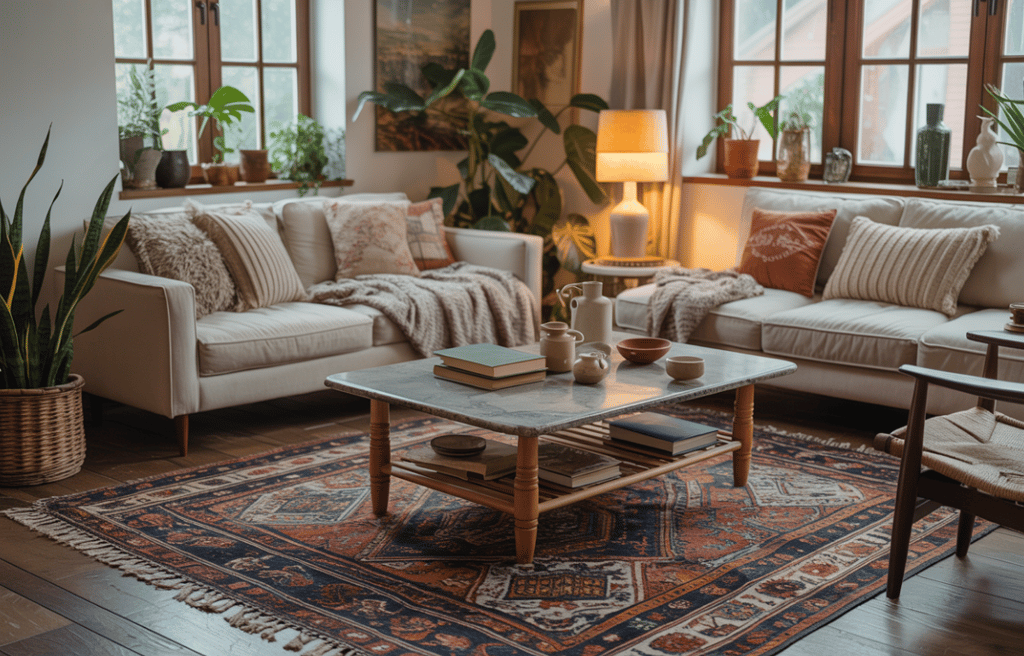
Have you ever walked into a living room that felt warm, expressive, and effortless, even though nothing technically “matched”? That is the quiet power of a bohemian living room.
It is not about perfect lines or curated sets. It is about comfort, character, and a sense that the space has grown naturally around the people who live in it.
Bohemian living room design ideas move away from strict design rules and lean into individuality. Layered textures, relaxed seating, global influences, and collected decor come together to create a space that feels lived in rather than staged.
Instead of decorating for approval, bohemian style encourages you to design for ease, self-expression, and everyday comfort.
In this blog, we’ll walk you through practical and realistic bohemian living room design ideas that help you create a space that feels authentic and inviting.
This guide is designed to help you build a bohemian living room that looks cohesive, feels personal, and evolves naturally over time.
What Actually Makes a Living Room “Bohemian”
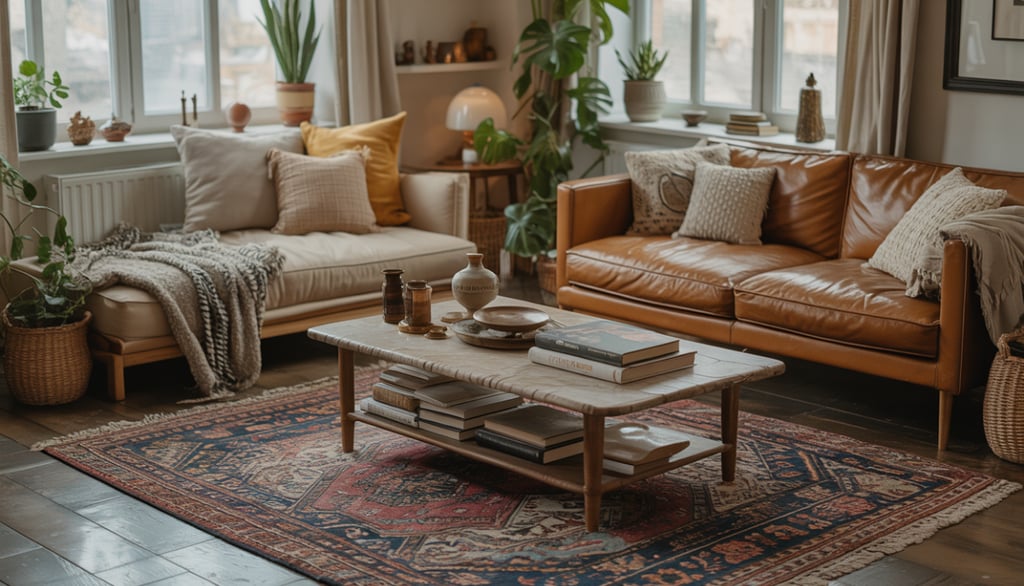
Before diving into furniture and decor, it helps to understand what bohemian style really is. Many people confuse it with messy or overly colorful spaces. In reality, bohemian interiors are intentional. They just do not follow conventional design formulas.
The term “bohemian” traces back to 19th century European artists and writers who rejected conventional social structures in favor of creative freedom. Publications such as Encyclopaedia Britannica describe bohemian culture as rooted in artistic individuality and nonconformity, values that later influenced interior design aesthetics.
A bohemian living room usually includes:
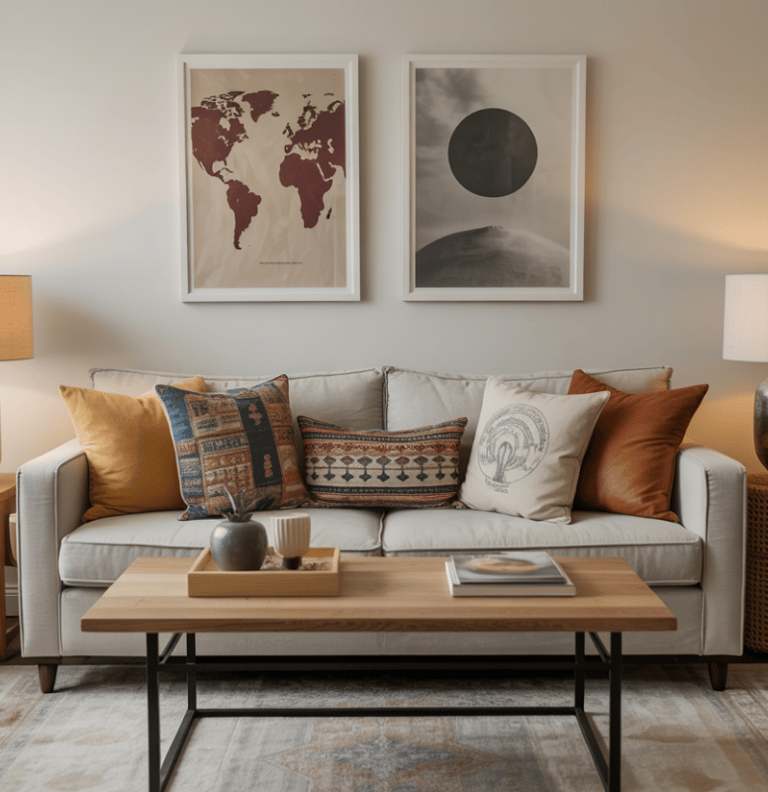
A mix of global and vintage influences
Layered textures rather than matching finishes
Furniture chosen for comfort first, aesthetics second
Colors that feel warm and expressive, not trendy
Decor that reflects personality, travel, or memory
The key difference is mindset. You are not decorating to impress guests. You are designing a space you want to exist in.
Ten Core Principles of Bohemian Living Room Design
Now, let’s jump into what truly makes a living room feel bohemian and how you can achieve it without overthinking the process.
Like we have mentioned before, bohemian design is not built on strict rules or matching pieces. It is shaped by comfort, texture, personality, and a sense of ease.
The principles below break down the key elements that define a bohemian living room and show how each one works together to create a space that feels warm, lived in, and intentionally unpolished.
Think of these as guiding ideas rather than instructions, each one helping you build a room that reflects who you are rather than what is trending.
Search data from Google Trends shows recurring spikes in searches for “boho living room” and “bohemian decor ideas” over the past five years, particularly during seasonal refresh periods.
The style’s resilience suggests it functions less as a trend and more as an evolving aesthetic category.
1. Start with a comfortable, unstructured seating setup
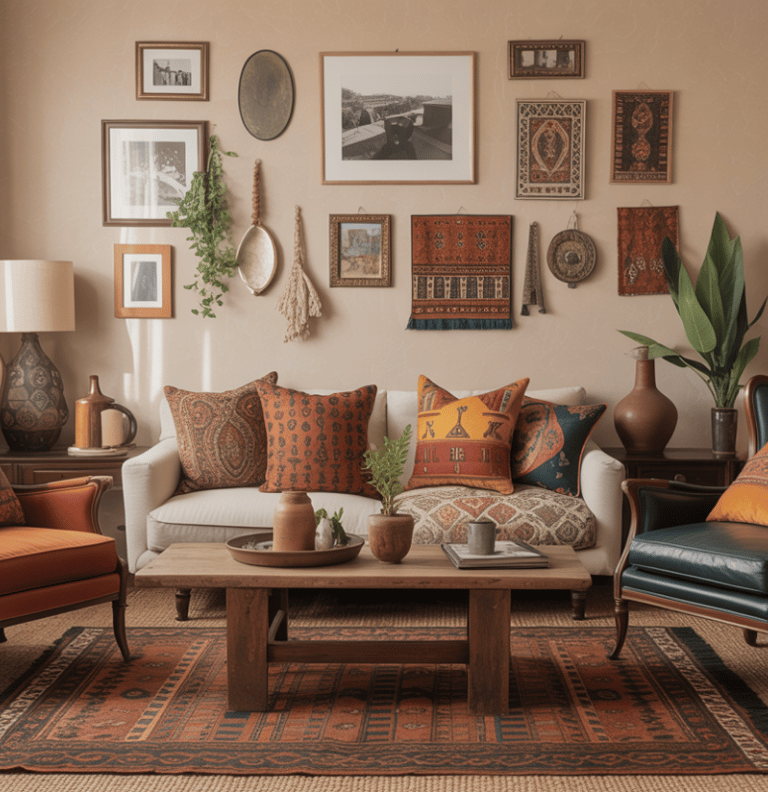
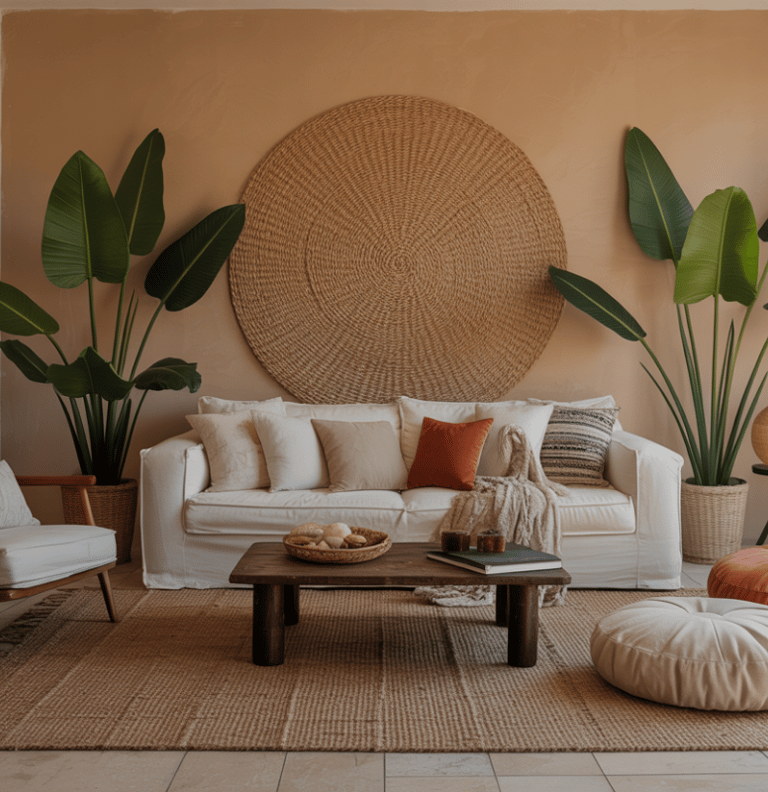
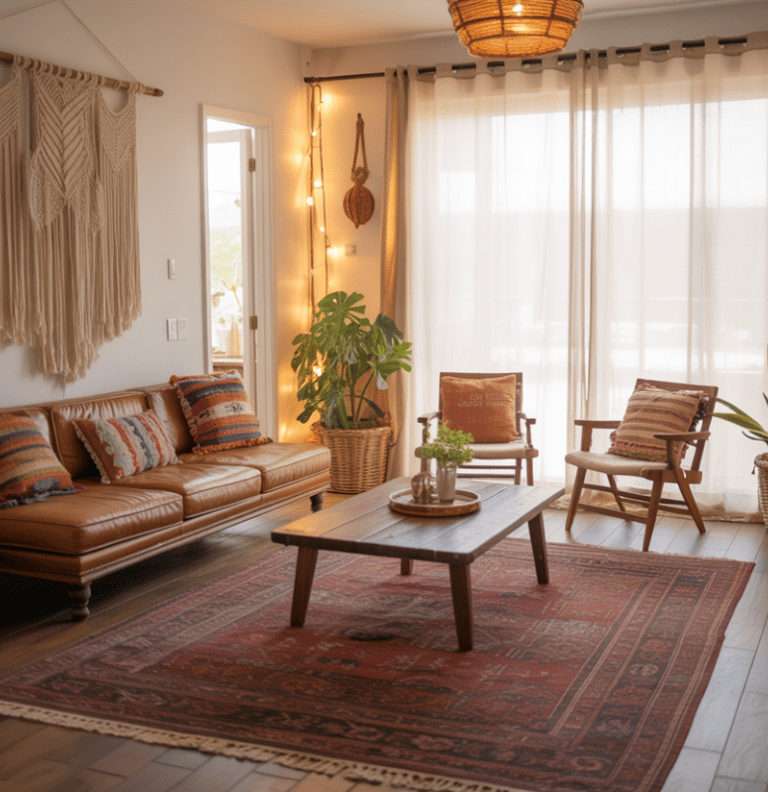
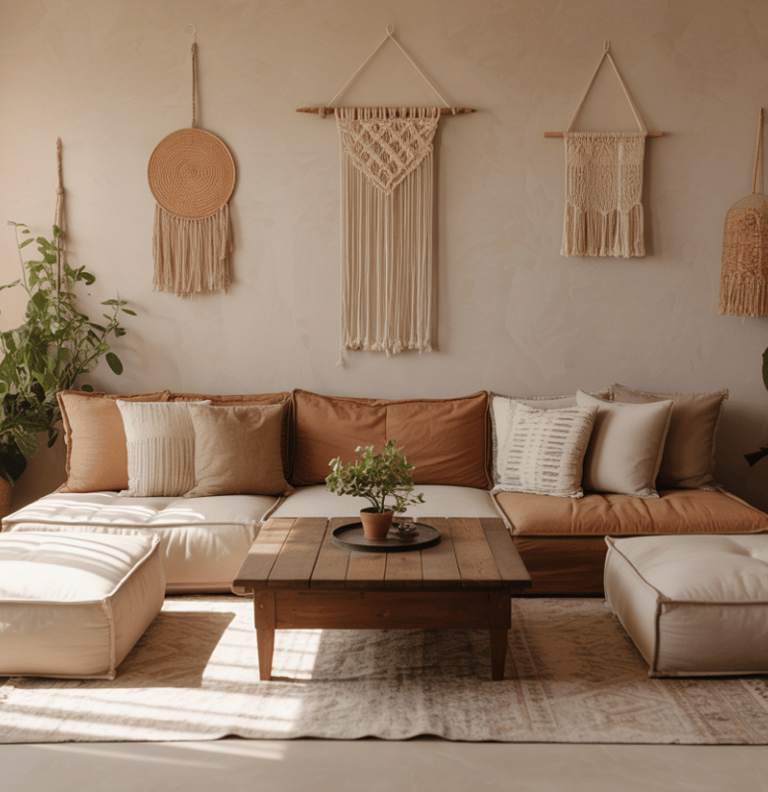
Bohemian living rooms are meant to be used and comfort matters more than symmetry. Instead of a perfectly aligned sofa and two matching chairs, think in terms of flexible seating. A deep couch with soft cushions works well as an anchor. Add a floor pouf, a low accent chair, or even layered floor cushions for extra seating.
In most living rooms between 150 and 250 square feet, interior layout planners recommend maintaining at least 30 to 36 inches of walking space between major furniture pieces to preserve flow. Flexible seating arrangements work best when pathways remain clear and conversation zones feel intentional rather than crowded.
Mismatched seating works beautifully here. A leather chair next to a fabric sofa is not a mistake. It is character. What matters is that everything feels welcoming and easy to sink into.
Avoid furniture that looks stiff or overly polished. Slight wear, visible texture, and softness make the room feel real.
2. Let rugs do the heavy lifting
Did you know that rugs are one of the most powerful tools in bohemian living room design ideas? Well, they add warmth, color, and structure without locking you into a single style.
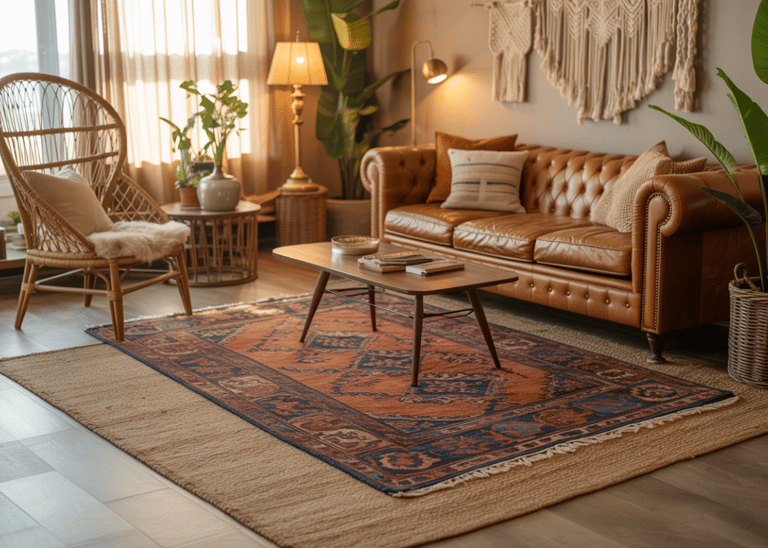
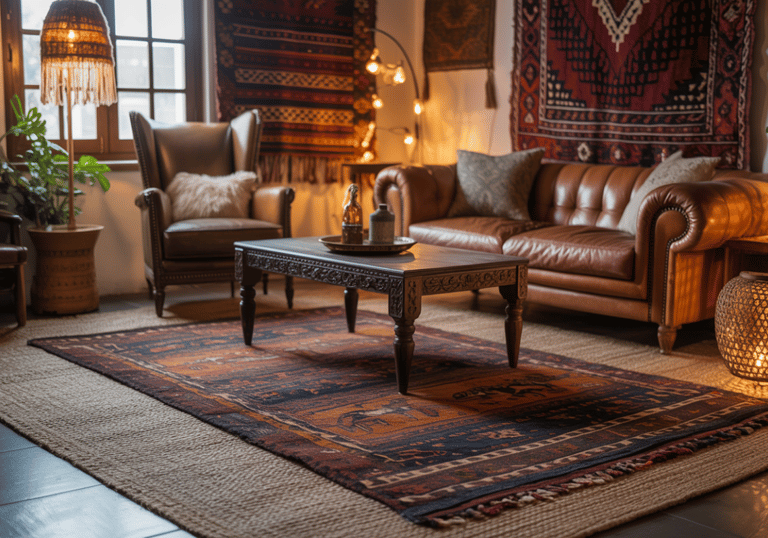
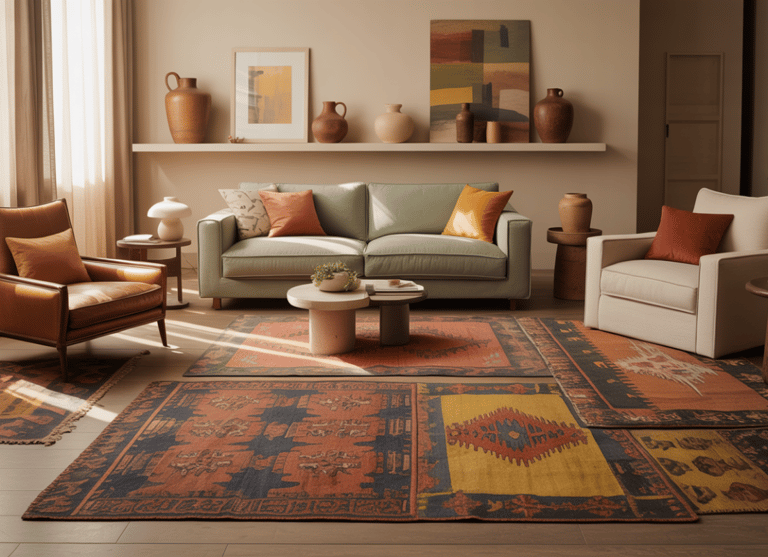
Do not be afraid to layer rugs. A neutral base rug with a patterned rug on top adds depth instantly. Vintage style rugs, Moroccan inspired patterns, or kilim designs work especially well.
Design retailers such as West Elm often suggest using a larger neutral base rug that extends beyond all major seating, then layering a smaller patterned rug centered under the coffee table.
If you prefer lighter, softer palettes, pastel rugs for bedroom spaces show how muted tones still create warmth and cohesion. This approach maintains balance while allowing visual contrast.
Rugs in bohemian spaces do not have to match the sofa or curtains. They simply need to belong. If the colors speak to each other, that is enough.
A well-chosen rug can tie together furniture from completely different eras and styles.
3. Embrace a warm, earthy color palette
Bohemian living rooms rarely feel cold. Even when neutral, there is warmth underneath.
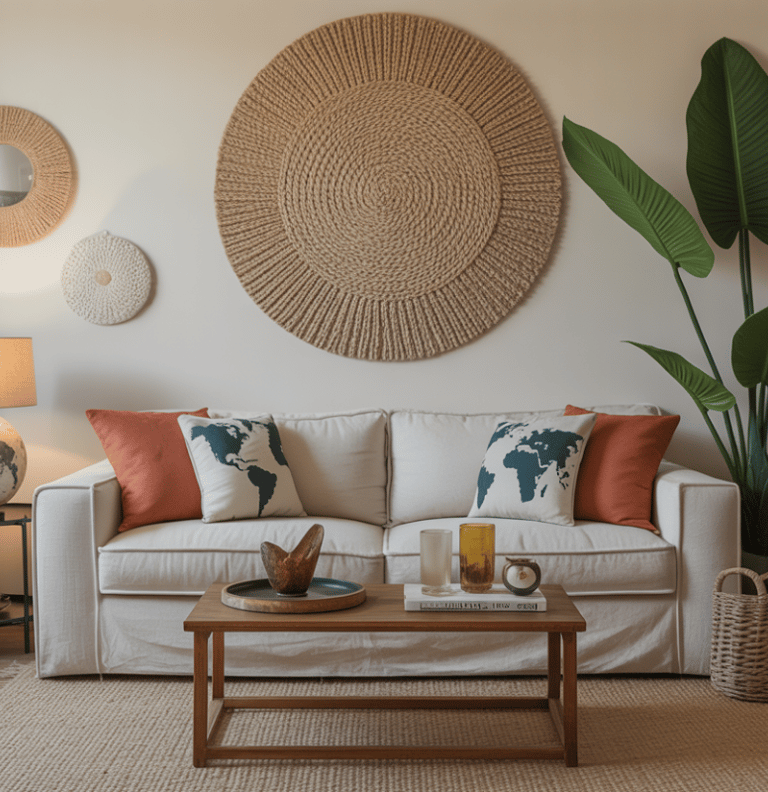
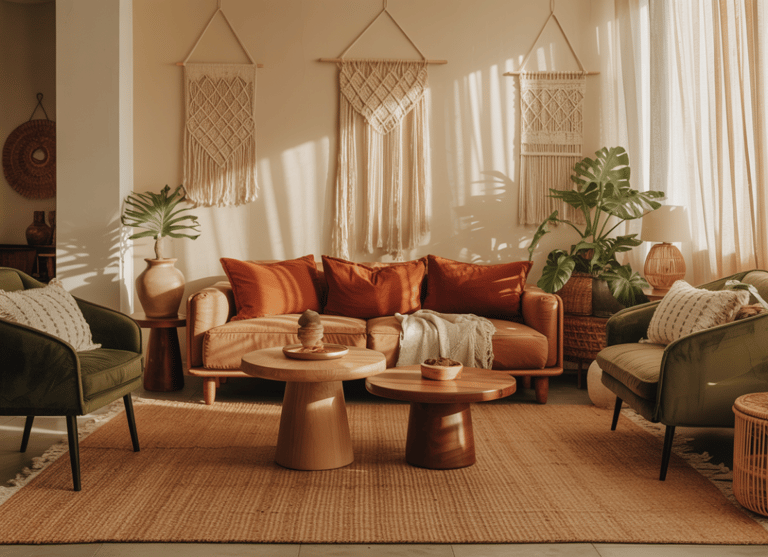
Earth tones are the backbone. Think terracotta, rust, olive, sand, caramel, and warm beige. These colors ground the space and make bolder accents feel intentional rather than overwhelming.
You can absolutely use jewel tones too. Deep teal, mustard, plum, or emerald green add richness when layered thoughtfully. The trick is balance. Let one or two colors lead, then support them with neutrals and texture.
White walls still work, but warm whites are better than stark ones. They allow patterns and decor to stand out without competing.
4. Mix textures like you mean it
Texture is where bohemian design truly shines. Without it, the room falls flat.
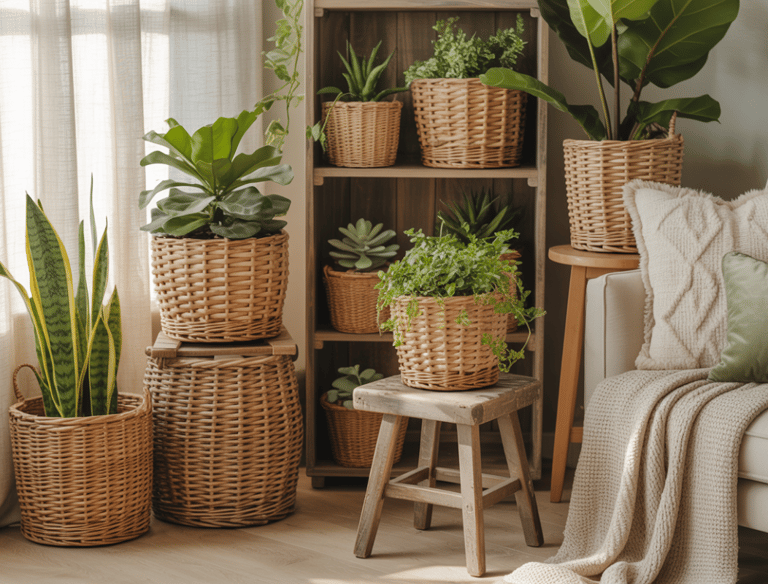
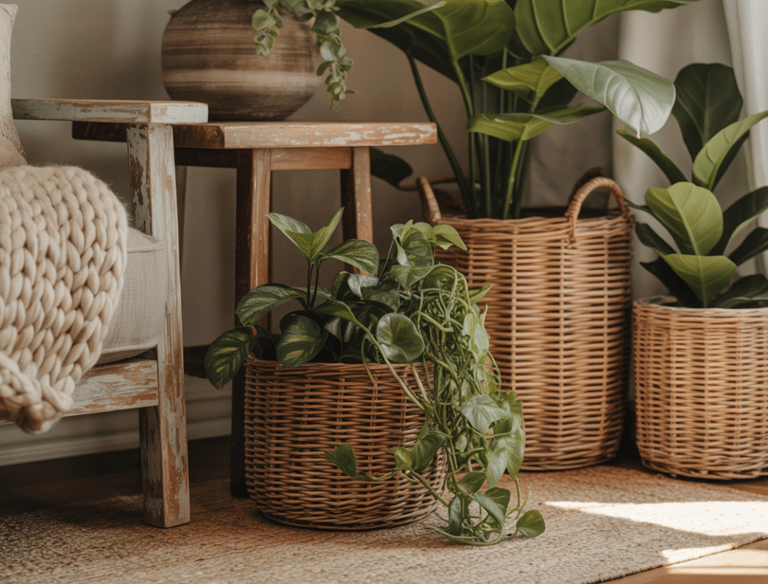
Layer different materials intentionally. Soft linen pillows, woven throws, leather accents, wood furniture, ceramics, metal, and plants all working together create depth that paint alone cannot.
Even subtle texture makes a difference. A chunky knit throw over a smooth sofa or a woven basket beside a sleek table adds contrast that feels organic.
If everything in the room feels smooth or glossy, it will not read as bohemian. Texture brings warmth and movement.
5. Decor that tells a story always wins
One of the biggest mistakes people make when trying bohemian style is buying decor sets. Bohemian living rooms are built over time, not assembled in one shopping trip.
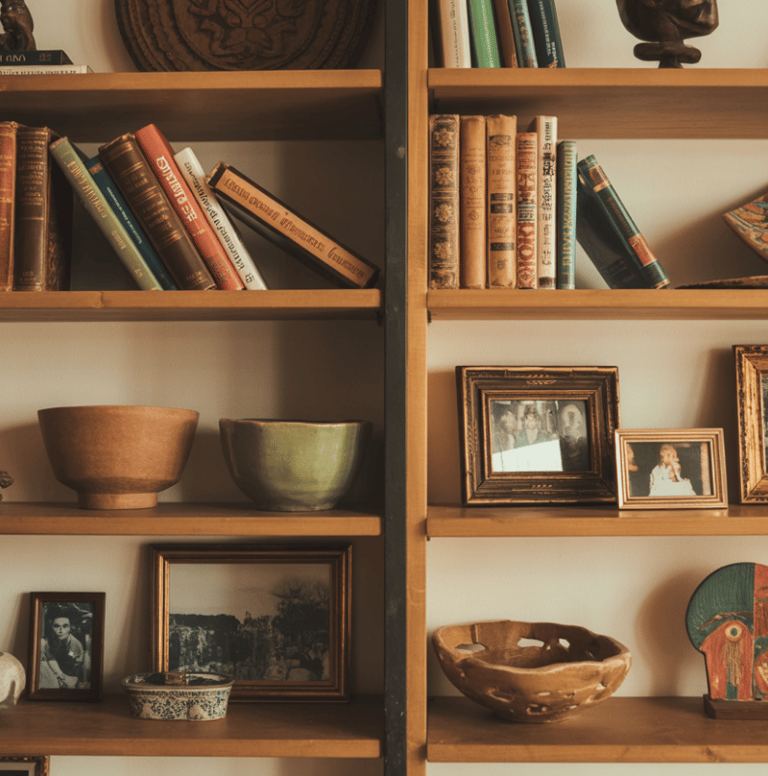
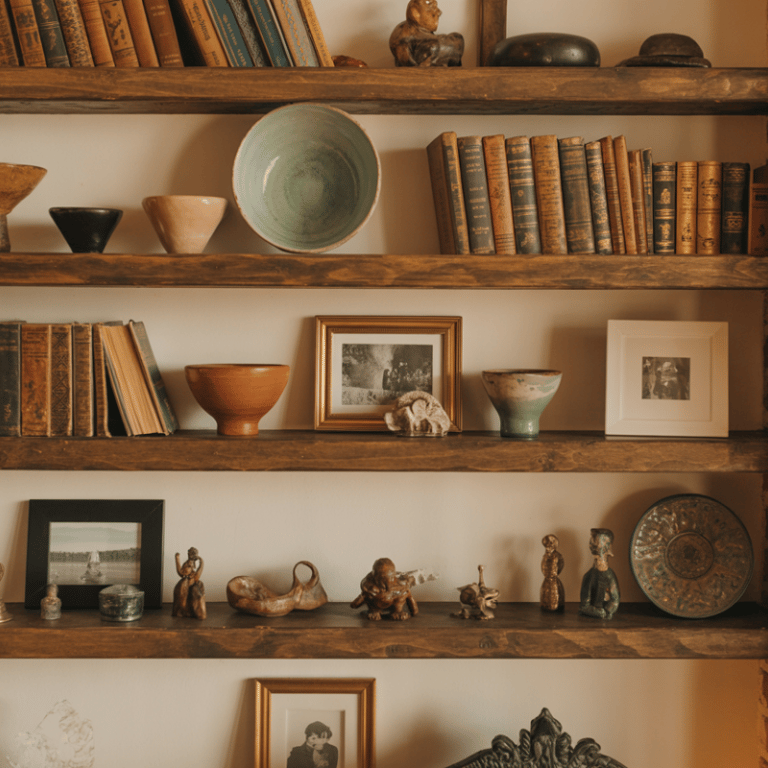
Choose decor pieces that mean something to you. Travel souvenirs, handmade ceramics, thrifted finds, old books, framed photographs, or art collected over years all add authenticity.
Wall decor does not have to be symmetrical. A gallery wall with different frame styles, sizes, and finishes fits perfectly into bohemian living room design ideas. Let it evolve naturally instead of planning every inch.
If a piece sparks a memory or emotion, it belongs.
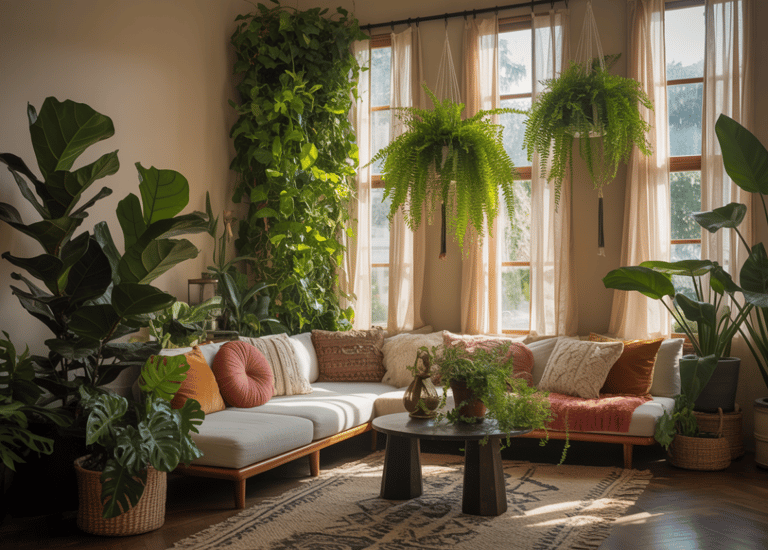
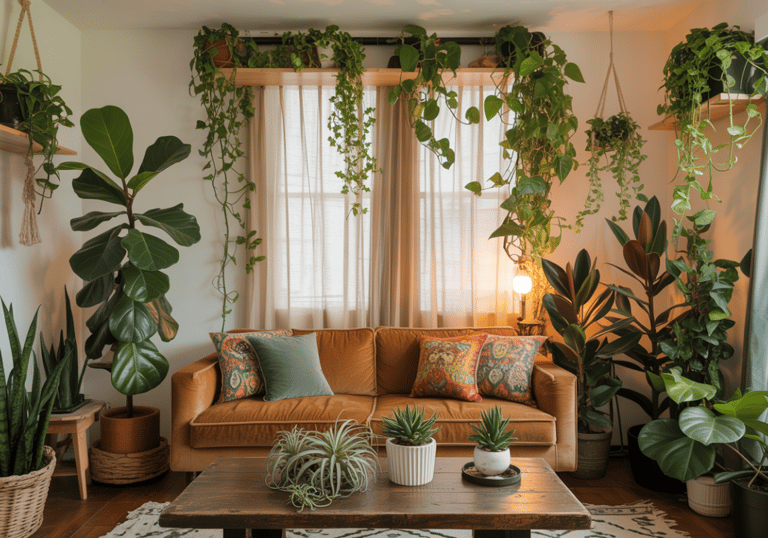
6. Plants are non-negotiable
A bohemian living room without plants feels incomplete.
Environmental psychology studies referenced by American Psychological Association indicate that indoor plants are associated with reduced stress perception and improved mood in residential settings, supporting their central role in relaxed interior styles.
Plants bring life, softness, and movement to the space. They also connect the interior to the natural world, which is central to bohemian design.
You do not need a jungle. A few well-placed plants make a huge difference. Floor plants add presence, while hanging plants or trailing vines soften corners and shelves.
Choose planters that add texture. Woven baskets, clay pots, or handmade ceramic planters enhance the aesthetic without overpowering the greenery.
Even if you only manage a few low maintenance plants, the impact is worth it.
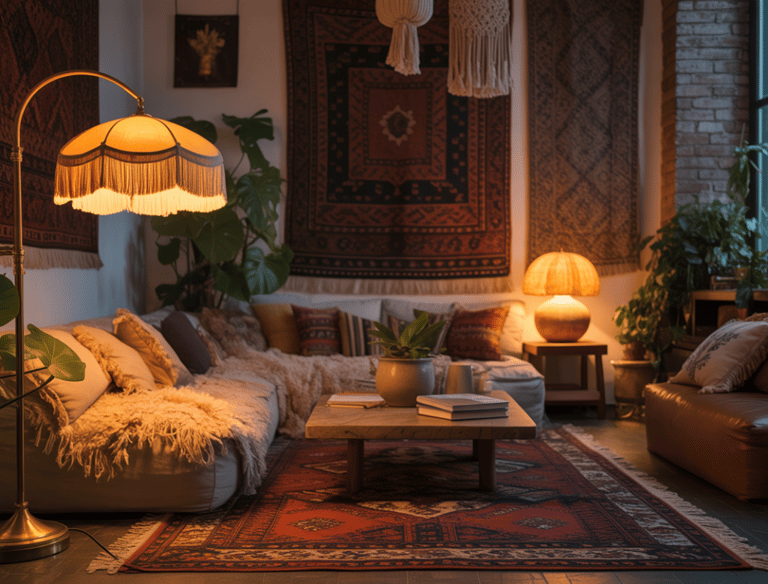
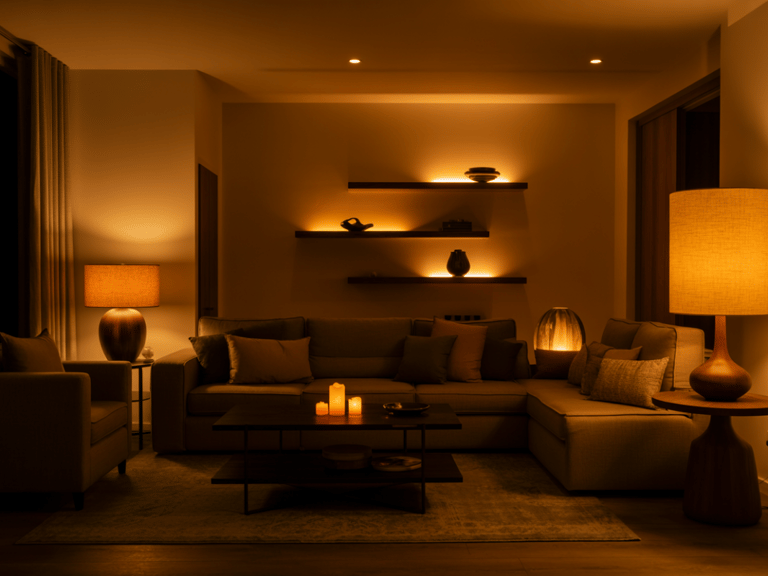
7. Lighting should feel soft and layered
Overhead lighting alone does not work for bohemian living rooms. The goal is atmosphere, not brightness.
Layer different light sources throughout the space. Floor lamps, table lamps, wall sconces, and even candles all contribute to a relaxed mood.
Warm light bulbs are essential. Lighting experts and manufacturers like Philips recommend bulbs in the 2700K to 3000K range for residential living spaces where comfort and relaxation are priorities. Cooler temperatures above 4000K tend to feel clinical rather than cozy. Cool lighting kills the cozy, collected feel bohemian spaces rely on.
Lamps with fabric shades, woven materials, or unique bases double as decor while creating soft light that invites you to stay longer.
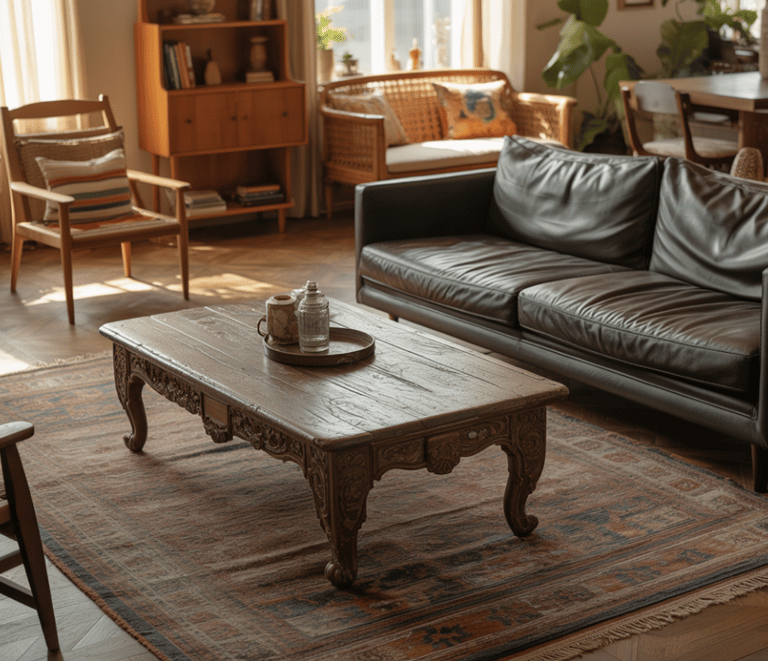
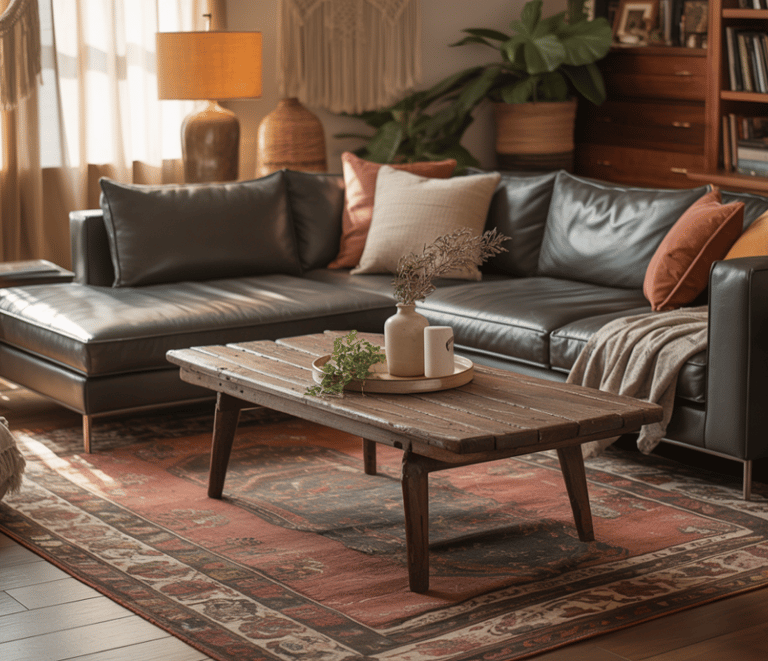
8. Furniture That Looks Collected, Not Coordinated
Bohemian furniture does not need to match. In fact, matching sets often work against the style.
The rise of secondhand furniture platforms and resale marketplaces has increased interest in mixed era interiors. Data from Statista shows steady growth in online secondhand furniture sales, reinforcing the collected aesthetic that defines bohemian spaces.
Mix wood tones freely. Pair modern shapes with vintage pieces. Use furniture with visible grain, wear, or handcrafted details.
Open shelving made from reclaimed wood adds depth without matching furniture sets. Explore rustic wooden shelf ideas for farmhouse interiors for practical installation options.
Low profile furniture works especially well in bohemian living rooms. It keeps the space grounded and relaxed. Coffee tables with storage or unique shapes add functionality without feeling heavy.
If a piece feels too perfect or overly styled, balance it with something rougher or more organic nearby.
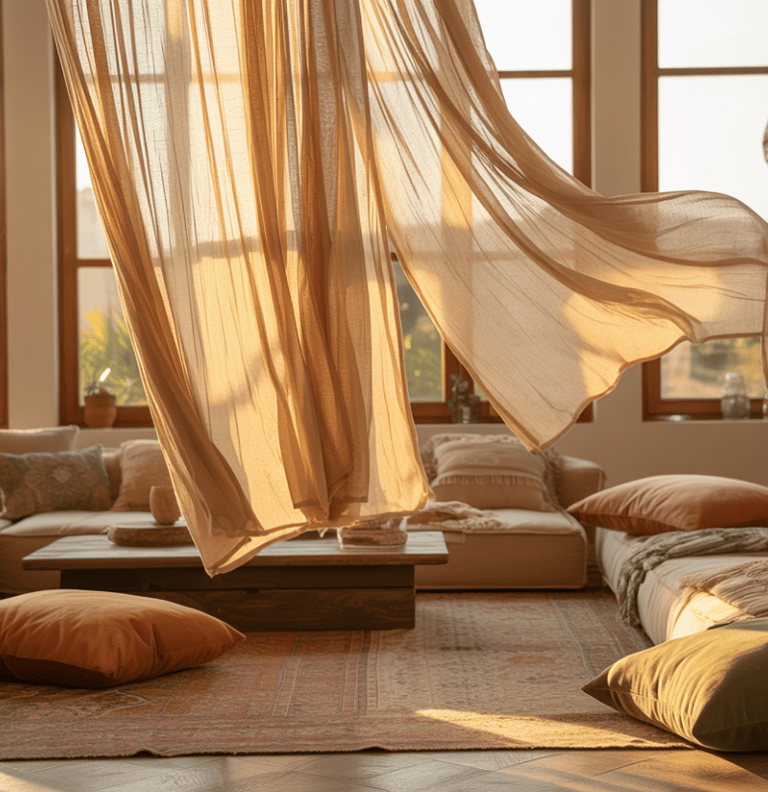
9. Curtains and fabrics should flow, not frame
Heavy, structured curtains are rarely a good fit for bohemian living room design ideas.
Opt for fabrics that move. Linen, cotton, or lightweight blends allow light to filter in while adding softness to windows. Neutral curtains work well, but subtle patterns can add interest without overwhelming the space.
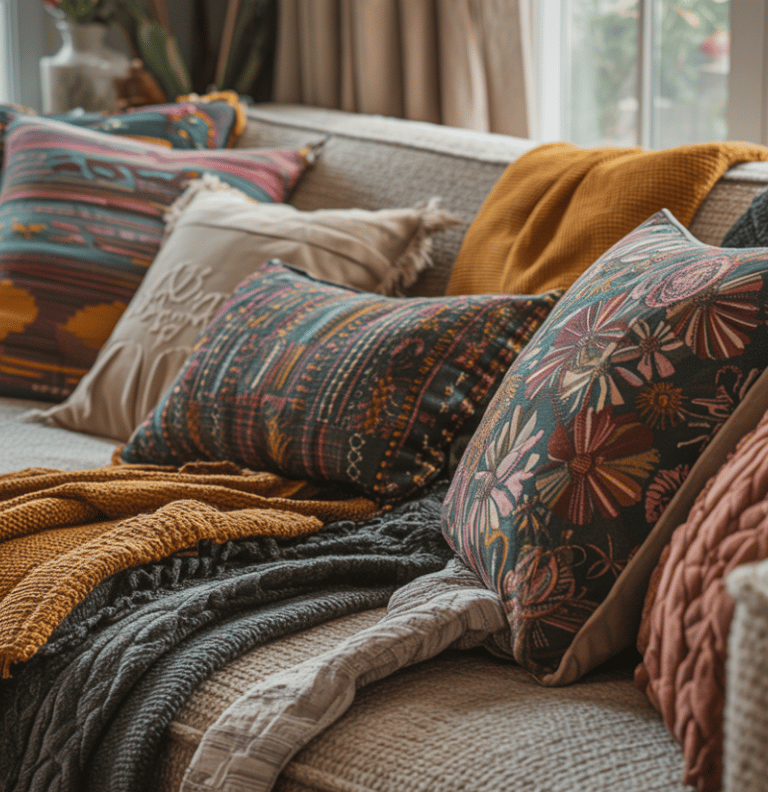
Throws and pillows follow the same rule. Mix patterns, sizes, and textures. Avoid making everything match. A little variation creates depth and personality.
Comfort always comes first here.
10. Leave Room for Evolution
The best bohemian living rooms are never finished.
Spaces evolve best when they include quiet corners for rest. Reading bench nook ideas offer practical ways to create those personal retreat areas.
They change as people change. New art gets added. Furniture moves around. Rugs get layered or swapped. That sense of evolution is part of the charm.
Resist the urge to perfect everything. Let the room breathe. Allow empty space where it feels right. Bohemian style is about expression, not filling every corner.
When your living room reflects who you are today while leaving room for tomorrow, you have done it right.
Final Thoughts
Bohemian living room design ideas are not about following trends or copying Pinterest photos. They are about creating a space that feels honest, comfortable, and personal.
When you prioritize comfort, texture, and meaning over perfection, the room starts to come together naturally. Each piece earns its place. Each layer adds depth.
In the end, the most beautiful bohemian living rooms are the ones that feel lived in, loved, and uniquely yours.
Frequently asked questions
What works best for a bedroom reading nook
A quiet corner near a window works well. Use a compact chair, wall light, and a small table. Soft lighting reduces eye strain during night reading.
How much space does a bedroom reading nook need
Around 1 to 1.5 square meters supports a chair, light, and shelf without crowding the room.
How much does it cost?
Our pricing varies depending on [what factors affect your price]. We offer a variety of options to fit your needs and budget. Please visit our [pricing page/contact us] for more information.
Which lighting suits a bedroom reading nook
Warm LED wall sconces or adjustable floor lamps support reading without disturbing sleep routines.
Should a bedroom reading nook match bedroom decor
Yes. Matching colors and materials keeps the space calm and visually balanced.
Where to place a reading nook in a living room
Corners near windows or beside bookshelves work well without blocking walkways.
What reading nook styles suit adults
Minimal, modern, or boho styles work well. Neutral colors and ergonomic seating improve long reading sessions.
Connect
Join our newsletter for cozy decor tips
Call
hello@girlydecorideas.com
974 5076-1799
© 2025. All rights reserved.